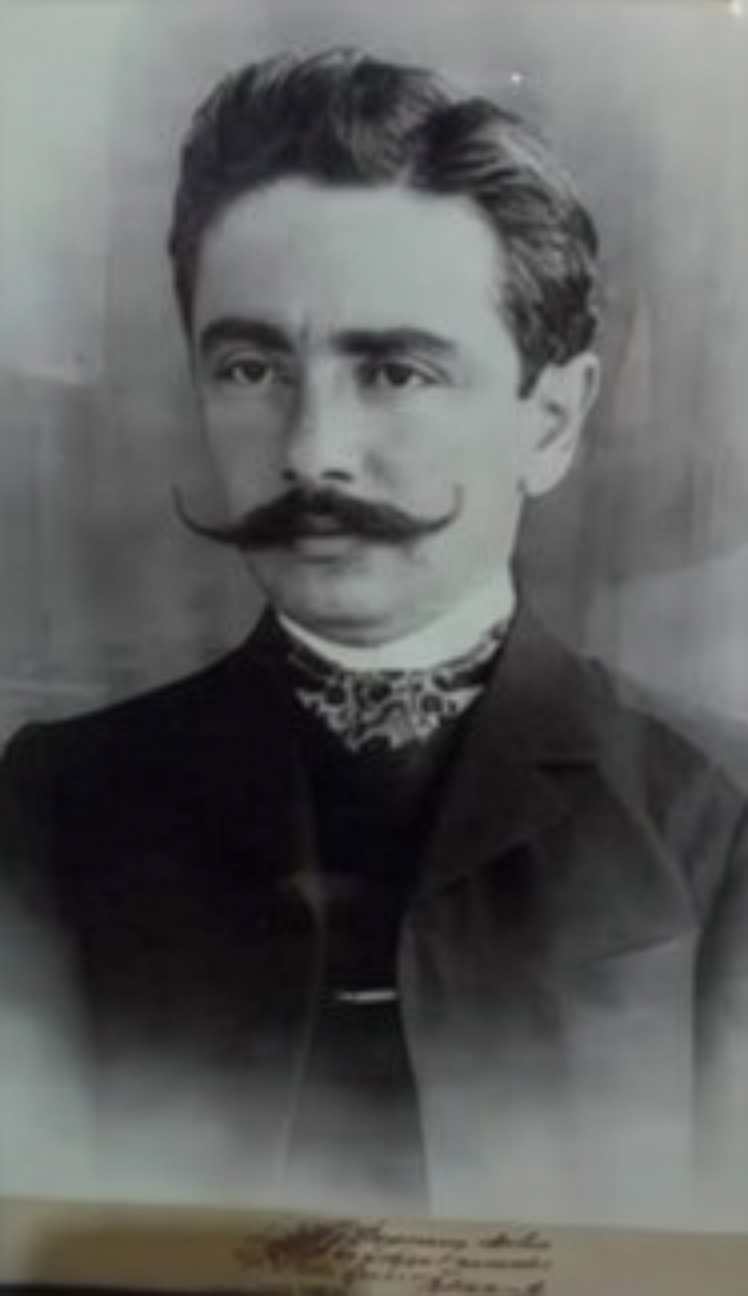
Prince Bahram Khan Kangarli Nakhchivanski (1872–1941)
Prince Bahram Khan Kangarli Nakhchivanski (1872–1941) was a prominent figure from the historical region and city of Nakhchivan, which is in present day the sole autonomous republic of Azerbaijan, governed by its own elected legislature. He served as the last General Governor of the Nakhchivan region during the turbulent years following World War I and was a founding father of the Republic of Aras. His great grandson Prince Cyrus Khan Kangarli Nakhchivansky is the official biographer and current head of the Nakhchivanski family.
Early Life and Background
Born in 1872 in Nakhchivan, then part of the Russian Empire, Prince Bahram Khan hailed from the esteemed Nakhchivanski family—a cadet branch of the Kangarli dynasty, which had ruled the Nakhichevan Khanate. His father was Amanullah Khan Nakhchivanski, a colonel, and his mother was Princess Khanbika Khanum Natavan, an Azerbaijani poetess and daughter of the celebrated Princess Khurshidbanu Natavan, widely considered as one of the best lyrical poets in Azerbaijani history. The Nakhchivanskis were deeply integrated into the military and political fabric of the region, with several members serving in high-ranking positions within the Russian Imperial Army
Political Career and Leadership
On February 28, 1919, amidst the ensuing regional conflicts, the Azerbaijan Democratic Republic established the Nakhchivan Governorate. Bahram Khan Nakhchivanski was appointed as its first Governor-General.
During his tenure, Bahram Khan faced significant challenges, including territorial disputes and ethnic tensions. Notably, in May 1919, Armenian forces, with the consent of the British command, established an administration in the Nakhchivan region. This move was met with strong resistance from the local Azerbaijani population. On July 25, 1919, the people of Nakhchivan launched a successful counterattack, expelling the Armenian administration and restoring Azerbaijani control over the region.
Bahram Khan’s leadership was instrumental in navigating the region through these tumultuous times, striving to maintain stability and protect the territorial integrity of Nakhchivan amidst external pressures and internal unrest.
Later Life and Legacy
Following the Soviet takeover of Azerbaijan in 1920, many members of the Nakhchivanski family faced persecution. While some emigrated to Europe and beyond, others, like Bahram Khan, remained in the region. He eventually relocated to Maku, a city in northwestern Iran, where he lived until his death in 1941.
Prince Bahram Khan Kangarli Nakhchivanski’s legacy endures as a symbol of resilience and leadership during one of the most challenging periods in Azerbaijani history. The major role he played in safeguarding Nakhchivan’s territory and autonomy and his commitment to his people’s welfare remain noteworthy chapters in the region’s historical narrative.
Further information about Bahram Khan Kangarli and the Kangarli family’s historical contributions can be found on the official website dedicated to the Khan Nakhchivanski lineage